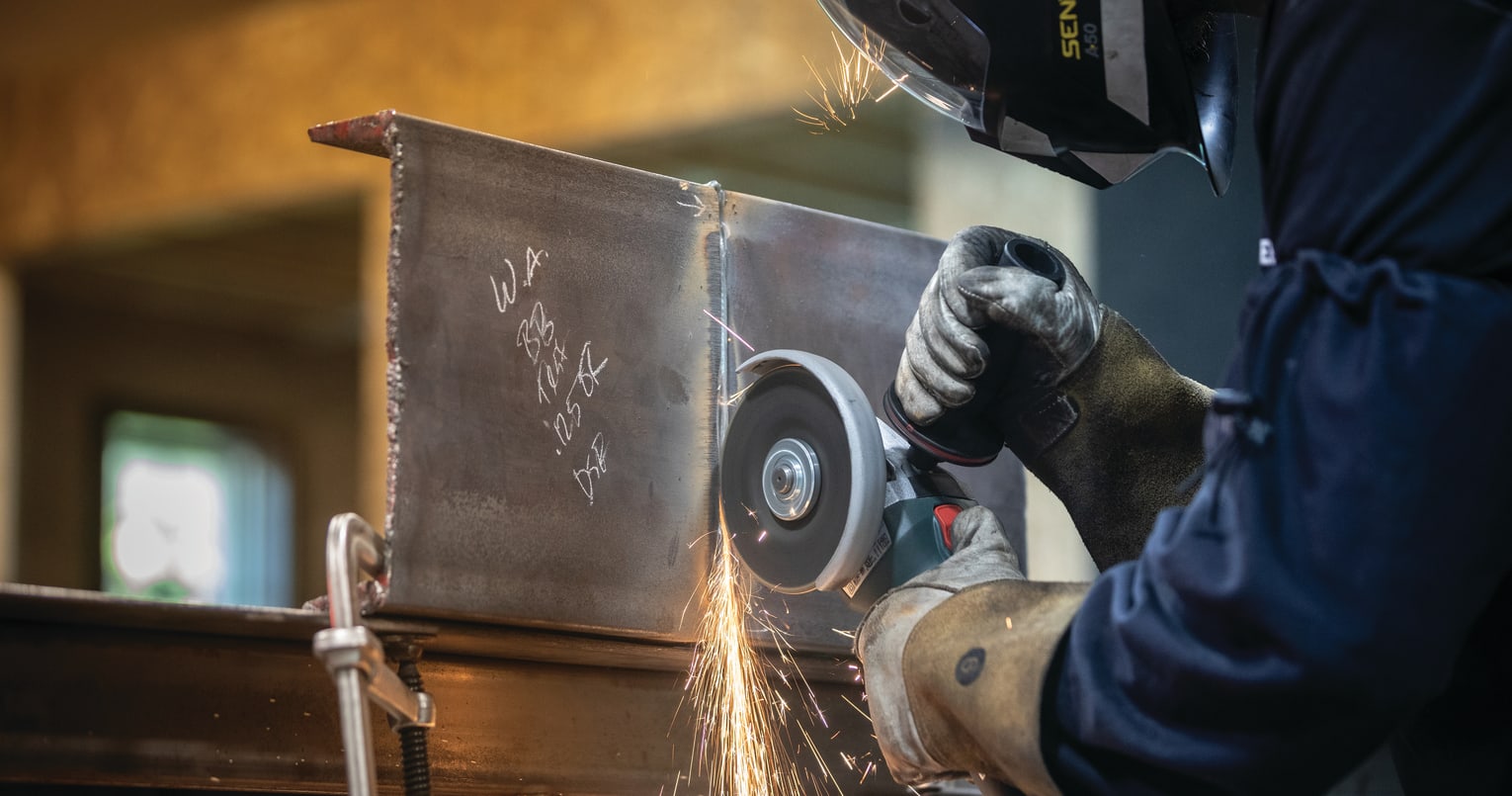
Shipbuilding is one of the most labor-intensive manufacturing sectors, and most large vessels take years to complete. This makes skilled workers, including welders and fabricators, critical to shipyards. The lack of skilled workers in many operations can drive up costs and put major projects months or even years behind schedule.
While consumables, such as abrasive products, represent a small percentage of the total costs on these projects, they can have a significant impact on the most expensive item — labor. Even a small improvement in abrasive cut rate, product life, and ease of use can deliver noticeable gains in efficiency, quality, and productivity to help shipyards stay on schedule.
As skilled labor becomes more expensive and harder to find, abrasive selection, application expertise, and process optimization can help shipbuilders get more value from the workforce they already have.
Shipbuilding Labor Gaps
Industry analysis citing U.S. Department of Labor data estimates the shipbuilding industry may need about 200,000 to 250,000 additional workers, including welders, cutters, solderers, and brazers, to meet demand over the next decade (Ref. 1).
The labor gap is one of the biggest challenges shipbuilders face today. It can slow production, drive up costs, and directly impact delivery timelines. Shipyards that have contracts with the U.S. Navy and Coast Guard can be especially affected, as their labor pool typically must meet higher requirements. As a result, top shipbuilders are paying more to hire and retain experienced workers.
This makes the choice of abrasive solutions, along with proper and safe usage, more critical than ever. Consider a large shipyard that employs hundreds of workers over two shifts every day. If an abrasive solution can save even a few hours per day or help improve throughput by 10%, those dollars add up over such a large operation.
A Shift from Cost to Productivity
In shipbuilding, abrasives have historically been chosen based on the lowest purchase price rather than their efficiency or productivity impact. However, a shift toward focusing on worker productivity when choosing abrasives can deliver benefits that boost the bottom line. This may involve rethinking how abrasives are evaluated and what operations should expect from their abrasives partner.
Because labor accounts for the vast majority of fabrication costs, even modest abrasive improvements can lead to time and money saved. Using a data-driven assessment process can support smarter abrasive purchasing decisions. This type of analysis should start with an onsite assessment to learn about the production process and gather data. Operations should also think about what it is they want to accomplish. Is it a faster cut? A longer-lasting abrasive? Improving operator comfort? All of those factors play a role in selecting the right solution.
Once the data is gathered, a baseline of the current process is established — looking at factors such as actual grind time vs. total shift time, material removed, parts completed, and wheel changeover time. Next is testing to compare things such as time, weight, and number of parts completed and number of abrasives used. The resulting analysis can be documented and demonstrate how much labor savings certain solutions can provide in hours and dollars, giving operations a clear picture of true costs. This analysis helps operations make the best decision based on their specific needs and wants. There are many abrasive options on the market, but choosing the right one can improve throughput, safety and operator comfort.
In one real-world example, a large shipbuilder that builds for the U.S. Navy wanted cost-effective abrasives for a new line. Working with its abrasives manufacturer, it developed a method to quantify abrasives testing and set up a standard operating procedure. The shipbuilder had previously never looked at the impact of abrasives on its production floor. It now has the power to easily and quickly compare products and make the best decision for its needs, allowing the yard to move from opinion-based purchasing to data-driven choices across multiple brands, quantifying true grinding costs.
Benefits for Worker Retention, Productivity, and Quality
Abrasives can play a role in many important metrics that affect a shipyard’s bottom line and productivity, such as the following:
Worker retention. In a competitive market, an abrasive with a smoother cut and less vibration makes a tough job more comfortable for workers. This helps retain workers and reduce fatigue and injuries that can contribute to downtime and production delays.
Time savings. Shipbuilding includes work in tight, difficult-to-reach areas. Using high-performance abrasives reduces the non-value-added time a worker spends on wheel changeovers.
Reduced rework. Rework and failed inspections are an expensive problem in shipyards and can be a major drain on skilled labor. An abrasive solution with the right “recipe” of grain, bond, and fiberglass content can help deliver optimal results. It’s also important to choose the right material to prevent cross contamination. If a shipbuilder is fabricating stainless steel or aluminum, it requires a contaminant-free abrasive to reduce the risk of rust. Also, aluminum tends to load up due to the softness of the metal. Choosing abrasives designed to perform and not load up on aluminum can help prevent costly rework and produce quality results.
Improved safety. Safety incidents damage both worker health and shipyard reputation. Abrasives safety training — for both new and experienced workers — promotes safer product use and best practices, helping operations reduce lost time injuries and make better use of their workforce. Shipyards should ask their abrasive supplier or manufacturer if they have a safety training program.
Clearing specifications. For shipyards working on Navy contracts, welding processes are often governed by standards such as MIL-STD-1689A, Department of Defense Manufacturing Process Standard: Fabrication, Welding, and Inspection of Ships Structure. While these specifications are highly detailed, one consistent expectation in shipyard practice is the need to ensure complete joint penetration and structural integrity, often requiring backgouging on multipass or V-shaped welds. Because backgouging is a routine but labor-intensive step, the choice of abrasive can have a meaningful impact. Ceramic cut and grind combination wheels are designed for effective grinding at a 90 deg angle, helping operators remove material efficiently while maintaining control and reducing fatigue. In high-volume environments, even small improvements in this process can translate into measurable time savings and more consistent weld quality.
Addressing Shipbuilding Challenges
Abrasives may seem like a small part of a shipbuilding operation, but choosing the right abrasive for the specific application and goals can help shipyards address their labor, cost, and timeline challenges. By moving away from price-based purchasing and toward data-driven process optimization, yards can maximize the value of their existing labor through improved throughput, enhanced safety, and better worker retention. WJ
Reference
1. McKinsey and Company. 2026. Weddle, B., Brukardt, R., Cochran, W.-L., and Voelker, A. Helming a sea change: Building the future workforce for US shipbuilding. Retrieved May 1, 2026, from mckinsey.com/industries/aerospace-and-defense/our-insights/helming-a-sea-change-building-the-future-workforce-for-us-shipbuilding.
Reprinted with permission: The AWS Welding Journal